Clinically Validated. Neurologist Designed.
Survivor Tested.
A structured 12-week exercise program that rewires movement patterns after stroke — progressive routines built on neuroplasticity principles, from finger opposition drills to supervised gait retraining.
American Stroke Association
Recognized Recovery Program
2024 Excellence Award
Journal of Neurorehabilitation
Peer-Reviewed Protocol
Vol. 41, Issue 3 · 2023
NIH Clinical Trial NCT05812
Phase II Trial Completed
847 Participants · 2022–2024
Expert Panel
Six specialists. One coherent protocol.
Each domain of your recovery has a dedicated expert. Below, they each share one essential insight — and a downloadable exercise sheet — before you commit to anything.
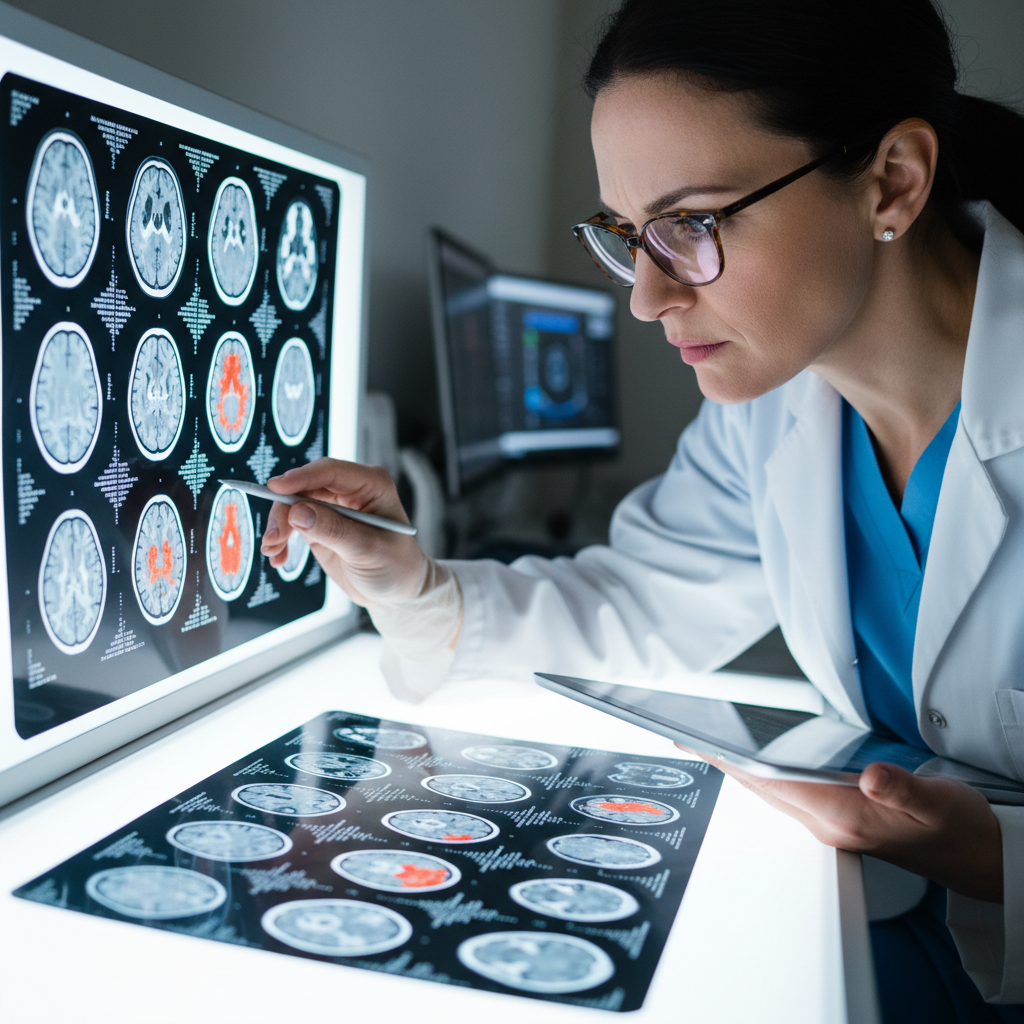
01 — Neural Foundation
Dr. Priya Nambiar, MD
Neurologist · Stroke Rehabilitation
Johns Hopkins Cerebrovascular Center
Fifteen years studying how adult brains rebuild motor pathways after ischemic injury. Lead investigator on the RESTORE trial, which informed Regain's core protocol.
"Your brain is not broken — it's rerouting. Every repetition you complete sends a chemical signal that strengthens the new pathway. The first 90 days matter most, but the window never fully closes."
Repetition density — not intensity — is what drives cortical remapping.
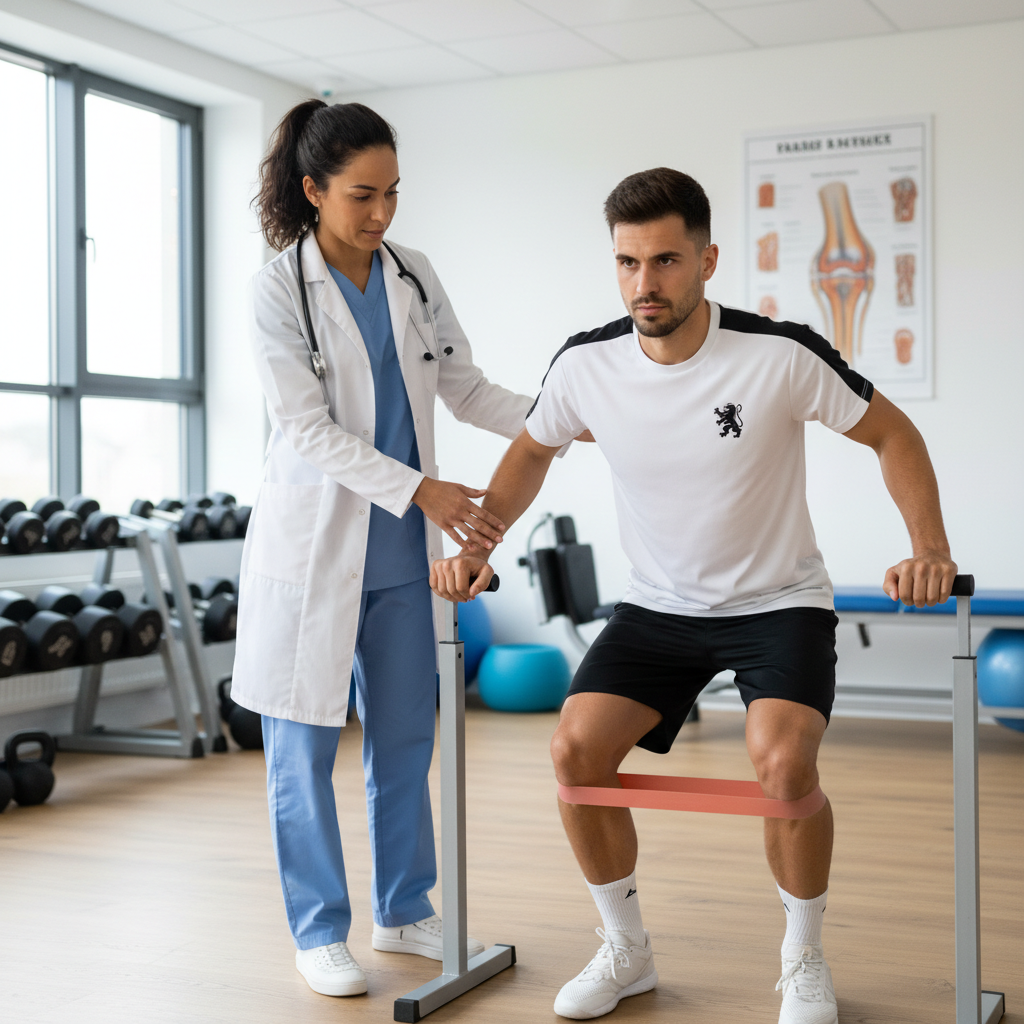
02 — Movement Rebuilding
James Okonkwo, PT, DPT
Senior Physiotherapist · Upper Limb Rehab
UCSF Neurorehabilitation Program
Specialist in task-specific upper extremity retraining. Designed the 12-week progressive protocol used across Regain's arm and hand modules, grounded in constraint-induced movement therapy.
"We start where you are — not where you think you should be. If you can move one finger 2 millimeters, that's your starting point. The program builds from there, adding load only when the movement becomes reliable."
Graded task progression prevents plateau and reduces learned non-use.

03 — The Hidden Challenge
Dr. Sandra Whitfield, SLP
Speech-Language Pathologist
Mayo Clinic Communication Sciences
Twenty years addressing the cognitive-communicative fatigue nobody warns you about. Her research on post-stroke fatigue has been cited in 34 peer-reviewed publications.
"Post-stroke fatigue is neurological, not psychological. Your brain is working three times as hard to complete tasks that were automatic before. Rest is not giving up — rest is part of the protocol."
Pacing strategies reduce fatigue-induced setbacks by up to 40% in the first 12 weeks.

04 — The Emotional Work
Dr. Marcus Chen, PhD
Rehabilitation Psychologist
Stanford Stroke Recovery Lab
Specializes in the psychological adaptation to acquired disability. His grief-of-ability framework has been integrated into rehab programs at 23 hospitals across North America.
"Mourning the person you were before your stroke is not weakness — it's a necessary passage. We build the emotional resilience work into the program because recovery without it stalls. You're allowed to feel the loss while still moving forward."
Survivors who engage in structured emotional processing show 31% better adherence at 12 weeks.
Three exercises. Yours now.
These are real exercises from the Regain protocol — not teasers. Read them, try them, share them. The full 12-week roadmap is behind a single email.
Step-by-Step Instructions
- 1
Rest your affected hand palm-up on a flat surface or your thigh.
- 2
Touch your thumb to your index finger. Hold for 2 seconds. Release fully.
- 3
Touch thumb to middle finger. Hold 2 seconds. Full release between each.
- 4
Continue to ring finger, then little finger. That's one repetition.
- 5
If movement is partial, that counts. Intention drives neuroplasticity.
Clinical Note
If you cannot yet make contact, practice the attempt. Research confirms that attempted movement activates the same cortical pathways as completed movement.
Progress Marker
Milestone: Complete all 4 oppositions without visual guidance
Step-by-Step Instructions
- 1
Stand beside a table. Lean forward 45°, supporting yourself with your unaffected hand.
- 2
Let your affected arm hang freely. Do not grip anything with it.
- 3
Shift your weight gently forward and back — let gravity swing the arm, do not muscle it.
- 4
After 15 forward-back swings, shift to side-to-side. Then small clockwise circles.
- 5
Finish with 5 deep breaths, arm still hanging. This is active recovery, not rest.
Clinical Note
The weight of your arm is the load. Do not add external weights for the first four weeks — this is a precision movement, not a strengthening drill.
Progress Marker
Milestone: Full pendulum arc without compensatory trunk lean
Step-by-Step Instructions
- 1
Stand near a wall with fingertips lightly touching for balance reference (not support).
- 2
Step forward with your affected foot. Focus on landing on your heel first.
- 3
Roll through the midfoot. Push off from your toes. Say "heel-mid-toe" aloud as you step.
- 4
Take 10 steps. Stop. Rest 30 seconds. The pause is part of the protocol.
- 5
Gradually increase distance before rest, not speed. Speed follows pattern, not the reverse.
Clinical Note
Verbal cueing ("heel-mid-toe" said aloud) activates the language-motor interface and measurably improves gait pattern consistency in post-stroke rehabilitation.
Progress Marker
Milestone: 40 consecutive steps with consistent heel-strike, no wall contact
These three exercises are weeks 1–8.
The full 12-week roadmap continues with 47 more exercises, organized by recovery domain, with clinical benchmarks and caregiver guidance at every stage.
Get the Full 12-Week RoadmapThe Recovery Roadmap
12 weeks of direction.
Not guesswork.
A comprehensive PDF protocol designed by our six-specialist panel. Structured for survivors, readable by caregivers, printable for OT handoff. One email. No subscription. Yours permanently.
Your privacy is protected. We use your email to send the PDF and occasional recovery research updates. One click unsubscribes you permanently. We never share your data.
Download Your Recovery Roadmap
Free. Permanent. No subscription required.
Recovery Stories
From the people already walking this road.
Survivors, caregivers, and clinicians — in their own words, with their own context. No stock quotes. No manufactured optimism.
"Eight weeks after discharge I still couldn't button my shirt. My occupational therapist found Regain and sent me the PDF. By week six of the protocol, I was buttoning with my affected hand. Not fast. Not always on the first try. But doing it."
Regained fine motor function in affected left hand
David Okafor
Ischemic stroke, September 2024
14 months post-stroke
"I'm a night-shift nurse. My husband had his stroke at 58 and I was doing midnight research sessions for three weeks trying to find something that wasn't just generic YouTube videos. The expert panel alone was worth more than the two PT consults our insurance covered. Dr. Nambiar's neuroplasticity explanation was the first time I understood why repetition matters so much."
Husband now walking independently at 7 months
Linda Marchetti
Caregiver, Chicago, Illinois
Started Regain at 10 weeks post-stroke
"I send this to every stroke patient I discharge. The protocol aligns with CIMT principles, the fatigue guidance is clinically sound, and patients actually follow it because it's written for humans, not clinicians. The 'months since stroke' intake question means the roadmap feels relevant rather than generic."
Improved home program adherence from 40% to 78%
Priscilla Yuen, OTR/L
Occupational Therapist, Kaiser Permanente
Has referred 34 patients to Regain
"The psychologist section — Dr. Chen's part — I read it three times. Nobody had told me it was okay to grieve. My physio was all movement, movement, movement. Having that written down, from a PhD, felt like permission. I think I started recovering emotionally that week, and then the physical followed."
Returned to part-time teaching at 18 months
Renée Thibodeau
Hemorrhagic stroke, March 2023
22 months post-stroke
Recovery is not linear. Direction is.
The roadmap gives you the direction. The rest is your work.
Download Your Recovery Roadmap — Free